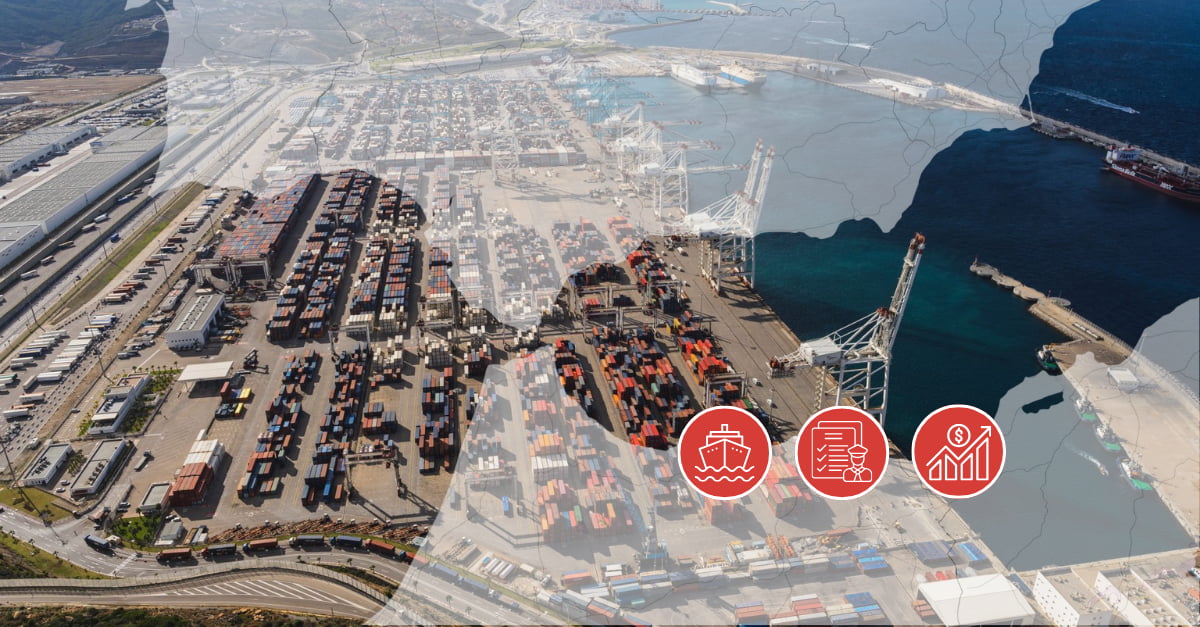


The 2026 World Cup, with 48 teams, 104 matches and 16 host cities, has required unprecedented coordination of the international supply chain. In these types of operations, logistics ceases to be a support service and becomes a strategic element essential to ensuring that everything runs smoothly. As an international logistics operator, at Operinter we know first-hand the importance of a flexible, resilient supply chain that is prepared to respond to the most demanding scenarios.
Continental coordination
The main challenge of the competition has been coordinating three countries with different regulatory frameworks. The United States, Canada and Mexico – the nations organising the championship – have had to integrate customs procedures, international transport and domestic distribution under a single operational strategy.
To this end, FIFA centralised operations through the Logistics Coordination Centre (LCC), which was responsible for overseeing logistics flows and coordinating operations between government bodies, operators and suppliers. In this context, customs clearance took on a particularly important role. Mexico and Canada simplified and streamlined the procedures for goods related to the tournament, which helped to speed up the cross-border movement of goods.
Impact on logistics operations
Hosting the championship led to an increase in activity across all modes of transport. Road transport handled deliveries to the venues and operational sites, whilst last-mile logistics ensured the continuous distribution of materials and supplies. Air freight provided the speed required to handle urgent shipments and high-value goods, whilst sea freight accounted for a large proportion of the pre-tournament movements, particularly those involving bulky materials.
This activity also led to increased demand for specialised storage and logistics services. Effective inventory management and delivery planning ensured the continuity of the supply chain and enabled a flexible response to the needs of an ever-changing situation.
Trends and challenges
The evolution of recent World Cups highlights an increase in logistical complexity. Whilst Qatar 2022 concentrated all operations within a single country, the 2026 tournament has required the coordination of operations on a continental scale. The next edition, to be hosted by Spain, Portugal and Morocco in 2030, will also add an intercontinental dimension. Beyond the sporting spectacle, this World Cup has reinforced the role of logistics as a key component of major international events. Efficient planning, precise coordination and a resilient supply chain will continue to be decisive factors in ensuring the success of such operations.