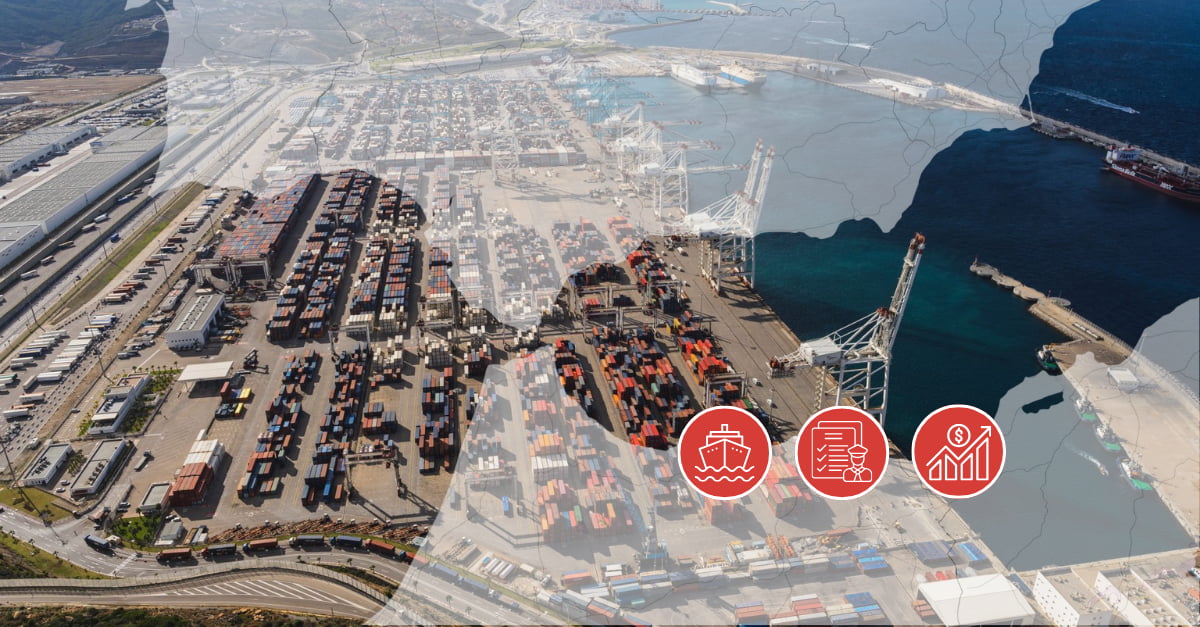


The year 2025 is coming to its final stretch and it is a time to reflect on what it has meant for the logistics sector. A year marked by the strong tariff policy imposed by the United States and a significant increase in volatility.
Specifically, this year has been conditioned by factors such as tariff changes driven by the US administration; the increase in operating costs in transportation, fuel and port services; the reconfiguration of routes and markets due to geopolitical tensions ; and greater demands from customers and regulatory bodies in relevant aspects such as sustainability and efficiency. A trend that will continue to define international trade at least during the first months of 2026.
Operinter as an international logistics operator present on five continents, has sought to ensure agile and reliable solutions that allow its customers to maintain continuity and efficiency of operations in a constantly changing global market.
All this has forced the sector to operate with unprecedented agility, replanning scenarios and adjusting strategies week by week, since the United States has applied a universal minimum tariff of 10% since last April. In addition to additional surcharges for blocks such as the European Union, which at certain times of the year have reached an effective rate of 28%, when at the beginning of the year it was 2.4%, according to a study by Yale University in the United States.
Although tariff tension has eased recently and many sectors now operate under a 15% benchmark tariff, rates remain well above the usual levels. Overall, the average rate of 14.4% recorded after recent adjustments remains the highest since the late 1930s, according to this report.
Competitiveness and supply chains
The dynamism and unpredictability of this tariff policy have led to sharp movements in international competitiveness. Countries that have reached agreements to lower their tariffs have strengthened their export position, while others continue to face higher barriers, affecting their ability to operate in the U.S. market.
For Europe, including the Spanish export network with a strong presence in sectors such as food, automotive, machinery and consumer goods, the 15% tariff introduced by the US administration represents a substantial increase compared to the beginning of the year. The need to recalculate costs, redesign routes and analyze alternatives of origin has become a constant practice in order to mitigate these protectionist measures.
Impact on businesses and consumers
Small and medium-sized companies – in the U.S. and
A global challenge that requires anticipation
Tariff uncertainty will continue to mark international trade in the coming months. In this scenario, the ability to adapt and the support of specialized operators becomes a decisive factor in maintaining competitiveness.
Operinter will continue to monitor the evolution of international trade policy and advise its customers to reduce risks, optimize processes and ensure that their shipments reach their destination with maximum guarantees.